Where a Platform Lives at Home: QQ333 and the Rooms We Put Screens In
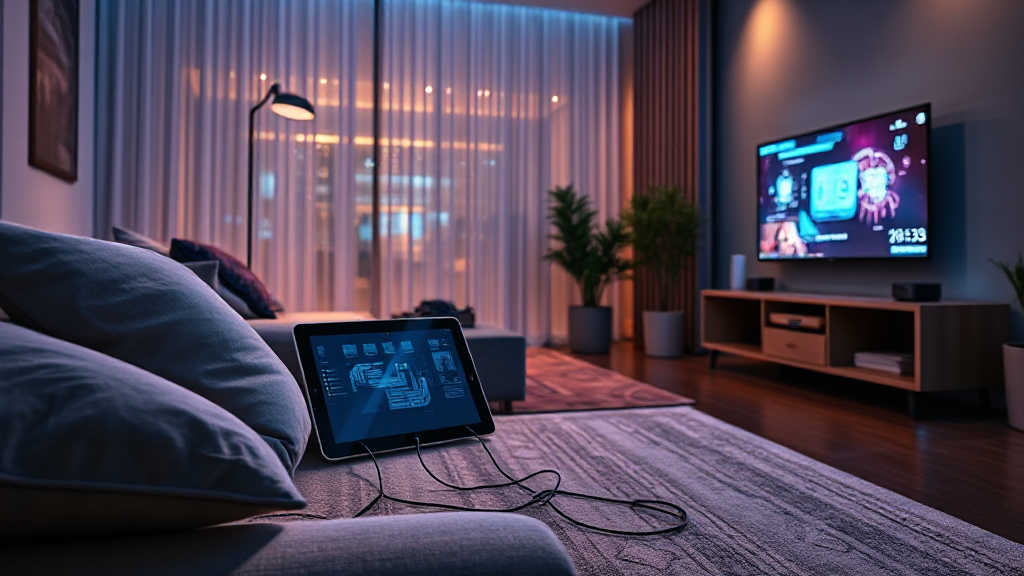
There is a tablet in the living room that nobody remembers buying a stand for. It sits propped against a cushion, charging cable trailing across the rug, and it has quietly become furniture — something you move when you vacuum and reach for when the room goes quiet. That small domestic detail raises a bigger question: when we talk about an online entertainment platform like YGN777, where does it actually live in a house?
Not in a server rack, and not in a single app icon. A platform lives wherever a screen lives, and screens have spread into almost every room. Understanding that geography is the fastest way to understand what an entertainment platform really is: a service that borrows the rooms we already have.
The Living Room: The Shared Screen and Its Habits
The living room is where most households first make room for a platform. The television is the obvious anchor, but the more interesting change is the second screen — a phone or tablet used alongside the main set, sometimes for the same service, sometimes for something else entirely.
This is the room where shared viewing sets the tone for everything else. A platform that works well here tends to work well everywhere, because the living room demands the widest range of behaviour: browsing together, disagreeing about what to watch, pausing for a conversation, resuming later.
Furniture, Cables and the Invisible Infrastructure
Every shared screen drags a small amount of infrastructure with it. A power strip behind the sofa. A charging cable that lives permanently under a cushion. A streaming stick tucked behind the television where nobody can see it. None of this is glamorous, but it is the physical layer that makes an online entertainment platform feel present.
Households that plan this layer — a dedicated outlet, a cable tidy, a shelf at the right height — end up using their screens more comfortably and less apologetically. The platform itself is invisible; the clutter is not.
The Kitchen and the Hallway: Short-Session Rooms
Not every room is built for long attention. The kitchen and the hallway are places of passing time: waiting for water to boil, pulling on shoes, standing at the counter with a coffee. Screens here are used in bursts, and the entertainment that fits is short, interruptible and easy to abandon mid-sentence.
An entertainment platform like QQ333 has to tolerate this behaviour. Short-session rooms reward quick loading and clear navigation more than they reward depth. If a service takes too long to open or buries its content behind too many taps, it simply will not survive the kitchen counter.
Voice and the Hands-Free Compromise
Many households solve the kitchen problem with voice control or a smart display, because hands are busy and counters are wet. The trade-off is real: voice is fast to start and clumsy to browse. It works for resuming something familiar and poorly for discovering something new.
The practical answer is to treat voice as a shortcut, not a replacement. Use it to start, pause or switch, and keep the visual interface for the moments when you actually want to choose.
The Bedroom: Private Space and Personal Screens
The bedroom is where shared viewing ends and personal use begins. This is the room most people associate with headphones, late-night scrolling and the quiet, private side of an online entertainment platform. It is also the room where screen habits matter most for sleep and for relationships.
Households that handle this well tend to make a few small agreements rather than grand rules. A charging spot outside arm’s reach. A cut-off time that everyone actually follows. Headphones for one person when another is reading. None of it is about the platform; all of it shapes how the platform gets used.
This is also the room where privacy becomes a practical concern, not an abstract one. Personal accounts, separate profiles and a shared device that remembers too much are all bedroom problems before they are technical ones.
Shared Versus Private Space: The Line Households Negotiate
The most useful distinction in any home is not which device is which, but which spaces are shared and which are private. A living room screen is communal by default; a bedroom phone is personal by default. An entertainment platform has to serve both without blurring them.
In practice, that means thinking about profiles, history and recommendations. A shared profile on a shared screen produces a muddled mix of tastes — children’s content next to documentaries next to whatever someone watched at midnight. Separate profiles, even on one device, keep the shared room usable.
- Shared space: one screen, multiple people, recommendations that should stay broad and family-safe.
- Private space: one person, one device, recommendations that can be narrow and personal.
- Transitional space: a tablet that moves between rooms, which needs the strictest settings of all.
The tablet that migrates from kitchen to bedroom is the hardest case, because it carries shared history into a private moment. Households that name this problem early avoid most of the awkwardness later.
Where the Platform Actually Lives
After walking through the house, the answer to the opening question is less tidy than it first appears. A platform like QQ333 does not live in one room. It lives in the gaps between rooms — in the charging cable by the sofa, the voice command from the kitchen, the headphones on the bedside table, the profile that keeps a shared screen from becoming a mess.
That is also the most useful way to judge one. Forget the feature list for a moment and ask where it would sit in your own home. Would it survive the living room’s shared opinions? Would it load fast enough for the kitchen? Would it respect the bedroom’s need for privacy? A platform that fits the rooms you already have is worth more than one that demands a new room to hold it.
The tablet propped against the cushion is not really furniture. It is a doorway, and every doorway is judged by where it leads.